

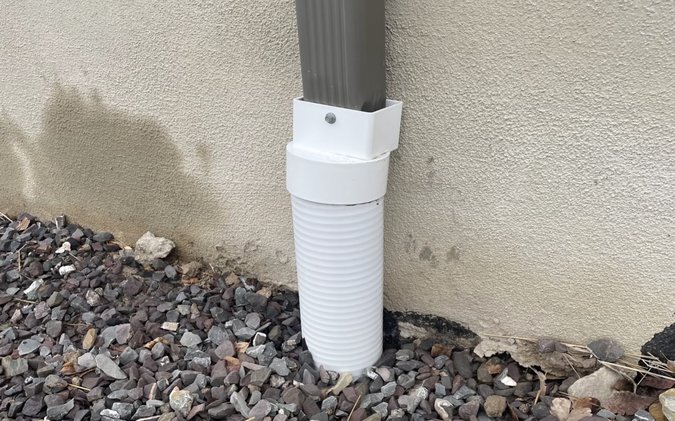
An in-ground drainage system is built to move water away from the foundation, and for most of the year it does that job without anyone thinking about it. Winter changes the picture. The buried pipe itself usually isn’t the issue – it’s the points where that system meets the surface, and those are exactly the spots a hard freeze can shut down.
The Buried Pipe Is Rarely the Weak Link
Pipe installed below the frost line is insulated by the surrounding soil and only holds water briefly while it’s actively draining, so it doesn’t sit still long enough to freeze solid under normal use. That’s the whole reason systems are buried at that depth in the first place. The trouble starts where the pipe comes back up to meet open air.
Discharge Points Are Where Freeze Problems Start
A pop-up emitter or daylight discharge sits right at grade, fully exposed to outside air, and that’s precisely where ice forms first. Once the outlet ices over or gets buried under a snowbank or plow berm, water backing through the pipe has nowhere to go. Instead of draining away, it backs up toward the foundation – the exact problem the system was installed to prevent.
Gutters and Downspouts Are Part of the Same System
Most in-ground drains tie directly into downspouts, so a frozen or ice-clogged gutter upstream means water never reaches the buried pipe at all. It just overflows at the roofline and runs straight down the foundation wall instead. Seamless gutters and in-ground drainage work as one connected system, and a failure at either end shows up as the same wet-basement call to a contractor.
Sump Discharge Lines Take the Worst of It
If a sump pump discharges to daylight or ties into the drainage system, that line is often shallower or more exposed than the rest of the run. When it freezes, the pump keeps trying to push water into a blocked pipe, which is how homeowners end up with a pump running constantly, or worse, water finding its way back toward the sump pit instead of away from it.
What to Check Before a Hard Freeze
Clear snow and ice away from pop-up emitters and daylight outlets so they have somewhere to actually discharge. Clean gutters of wet leaves and debris before the first freeze, since a clog there is what causes ice to build up and back up the whole line. If a sump discharge line runs above or near grade, make sure it’s not sitting in a spot that collects drifting snow. And after any freeze-thaw cycle, walk the yard and check for standing water near the foundation or at a discharge point – it’s usually the first sign something downstream is blocked.
Where This Matters Most in Utah
Homes along the benches of Utah and Salt Lake counties see the most freeze-thaw cycling, since daytime sun melts snow that refreezes overnight, repeatedly icing over the same discharge points. Clay-heavy soil in parts of the valley also drains slower to begin with, so a blocked outlet backs up faster than it would in sandier ground. St. George’s milder winters make this far less of a concern, though a hard freeze there can still catch an exposed discharge line off guard.
If you’re not sure where your drainage system discharges, or you noticed water pooling near the foundation after last winter’s thaw, contact Ridgeline Home Exteriors. We’ll trace the system from gutter to outlet and make sure it’s actually clear before the next freeze hits.