

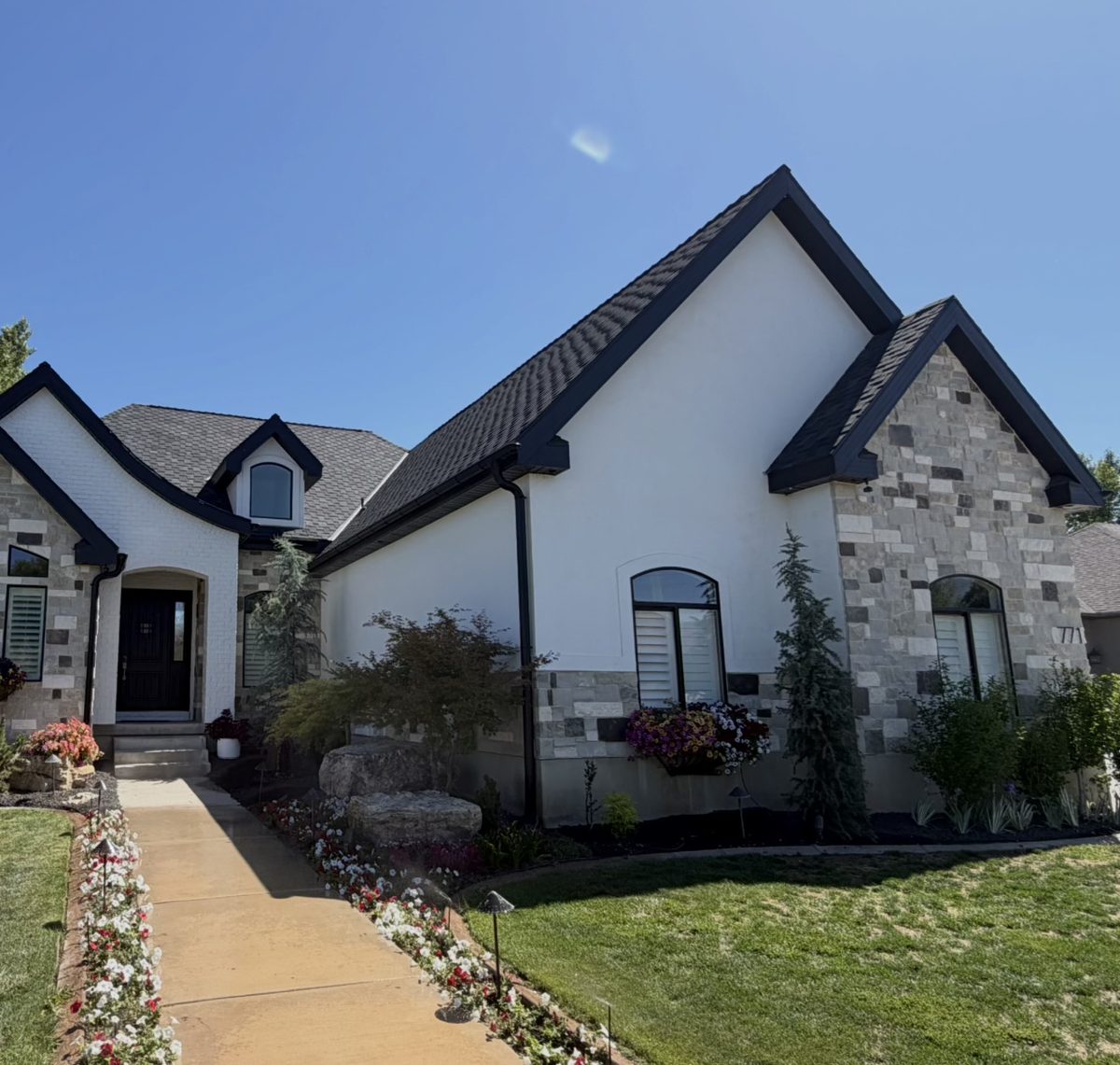
Ridgeline gets calls every year from homeowners whose stucco is showing hairline cracking or fading, after a painting contractor has pitched an elastomeric coating as the fix – roll it on, and the wall is waterproofed for good. That promise only holds up half the time. An elastomeric coating can genuinely add years to stucco that’s structurally sound but cosmetically tired. Applied over stucco that already has a moisture problem, it can make things worse by sealing that moisture in.
What an Elastomeric Coating Actually Is
Elastomeric coatings are thick, rubber-like acrylic formulations, applied at several times the thickness of standard exterior paint. Where paint forms a thin, relatively rigid film, an elastomeric coating cures into a flexible membrane that stretches and rebounds as the stucco beneath it expands and contracts with the temperature. That elasticity lets it bridge hairline cracks – the kind caused by normal seasonal movement – without cracking along with them, which is where most of the waterproofing claim comes from.
Why the Promise Doesn’t Cover Every Wall
The coating is a surface treatment, not a repair. It sits on top of the stucco and does nothing to address what’s happening behind it. If water is already getting into the wall assembly through a missing kickout flashing, a buried weep screed, or a control joint that’s been caulked shut, an elastomeric coating won’t stop that path. It can actually make the problem harder to catch, because the coating itself is close to vapor-impermeable – moisture that does get behind the wall has fewer ways to dry out, and the staining or bubbling that would normally tip off a homeowner gets masked under a fresh, even coat instead.
What It Won’t Fix
No coating corrects structural cracking from a settling foundation, delamination where the stucco has separated from its substrate, or stucco that’s already saturated behind the surface. Coating over any of these buys a few months of better curb appeal before the same problem resurfaces, usually with the added cost of stripping a coating that doesn’t breathe before the real repair can even start.
Where It Genuinely Earns Its Cost
On a wall with networked hairline cracking from Utah’s wide temperature swings, but no sign of moisture intrusion behind it, an elastomeric coating is a reasonable option. It can extend the service life of aging but sound stucco by several years, refresh the color and texture, and reduce the odds of new hairline cracks forming in the near term. It’s best thought of as a maintenance tool for stucco that’s otherwise healthy, not a substitute for addressing drainage, flashing, or structural issues underneath it.
Prep Work Decides the Outcome
The coating is only as good as what it’s applied over. That means inspecting for existing cracks and repairing them properly first, confirming the flashing and weep screed are still doing their job, and letting any trapped moisture dry out fully before the coating ever goes on. Skipping that step is how a product meant to extend a wall’s life ends up sealing a problem in instead.
If you’re weighing an elastomeric coating against a skim coat or a more targeted repair, reach out to Ridgeline Home Exteriors. We’ll look at what’s actually happening behind your stucco before recommending what goes on top of it.