

Most Utah homes with drainage problems can be fixed at the surface – regrading a yard, adding a French drain, or tying a window well into a proper drain line. But some homes have water showing up somewhere a shovel and a buried pipe can’t reach: a basement floor drain, a crawl space, or a low corner of the yard with nowhere for water to flow downhill. That’s where a sump pump comes in, and it’s worth understanding how one fits alongside the drainage work most Utah homes actually need.
What a Sump Pump Actually Does
Every other fix on this list – French drains, downspout extensions, window well drains – relies on gravity. Water moves because there’s a slope for it to follow, ending at a daylight discharge point somewhere lower than the problem area. A sump pump exists for the situations where gravity can’t finish the job: water collects in a pit, usually set into a basement or crawl space floor, and a pump mechanically pushes it up and out through a discharge line once it reaches a certain level.
Why Some Utah Homes Need One
Daylight basements are common throughout Utah County and the Salt Lake Valley, but not every lot has enough natural slope to drain a basement level by gravity alone. Homes built into a hillside, homes on a flat lot with a high water table, or homes where the lowest point of the property is the house itself all share the same problem – there’s no downhill path for water to follow out of the basement or crawl space. Heavy clay soil makes it worse, holding water near the foundation longer than a gravity-only system can keep up with.
Signs Exterior Drainage Alone Isn’t Enough
If you’ve already had gutters, downspout extensions, or a French drain installed and you’re still seeing dampness in one low corner of the basement, a floor drain that backs up during heavy rain or spring snowmelt, or a sump pit that was put in years ago and never checked since, that’s usually a sign the exterior fixes have done what they can and the remaining water needs a mechanical way out.
How It Ties Into Your Yard’s Drainage System
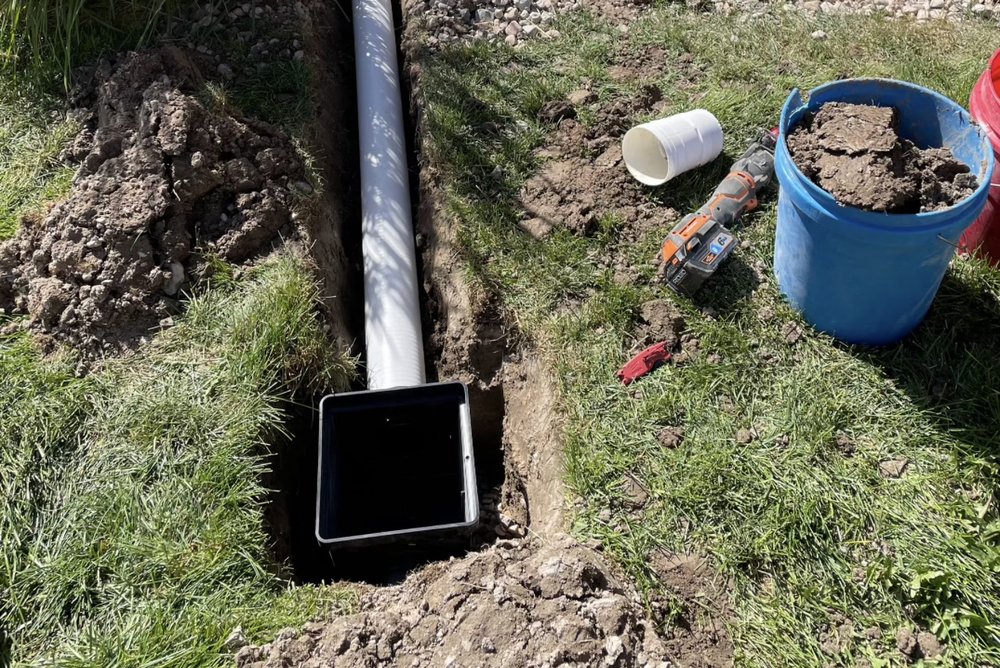
A sump pump doesn’t operate in isolation – where its discharge line ends up matters just as much as the pump itself. We regularly find sump discharge lines that were run a few feet from the house and left to dump straight back into the soil next to the foundation, undoing the point of having a pump in the first place. When we design or update an in-ground drainage system, we tie the sump discharge into the same buried line and daylight or pop-up emitter that carries water from the gutters and yard drains, so it actually leaves the property instead of resurfacing right next to the house.
Battery Backup Matters Here
Utah’s windstorms and winter storms are exactly when sump pumps get tested hardest, and they’re also when power outages are most likely. A pump with no backup power is a single point of failure at the worst possible time. If your home depends on a sump pump, a battery or water-powered backup is worth the investment.
Keeping It Working
A sump pump that’s never tested is a pump you’re just hoping works when you need it. Pour a bucket of water into the pit once or twice a year to confirm the float switch triggers and the pump kicks on, and check that the outside end of the discharge line isn’t buried, crushed, or blocked by yard debris.
If your basement or crawl space still has water problems after grading and gutter work, or you want to make sure your sump pump’s discharge is tied into a drainage system that actually carries water away from your home, reach out to Ridgeline Home Exteriors for a full drainage evaluation.