

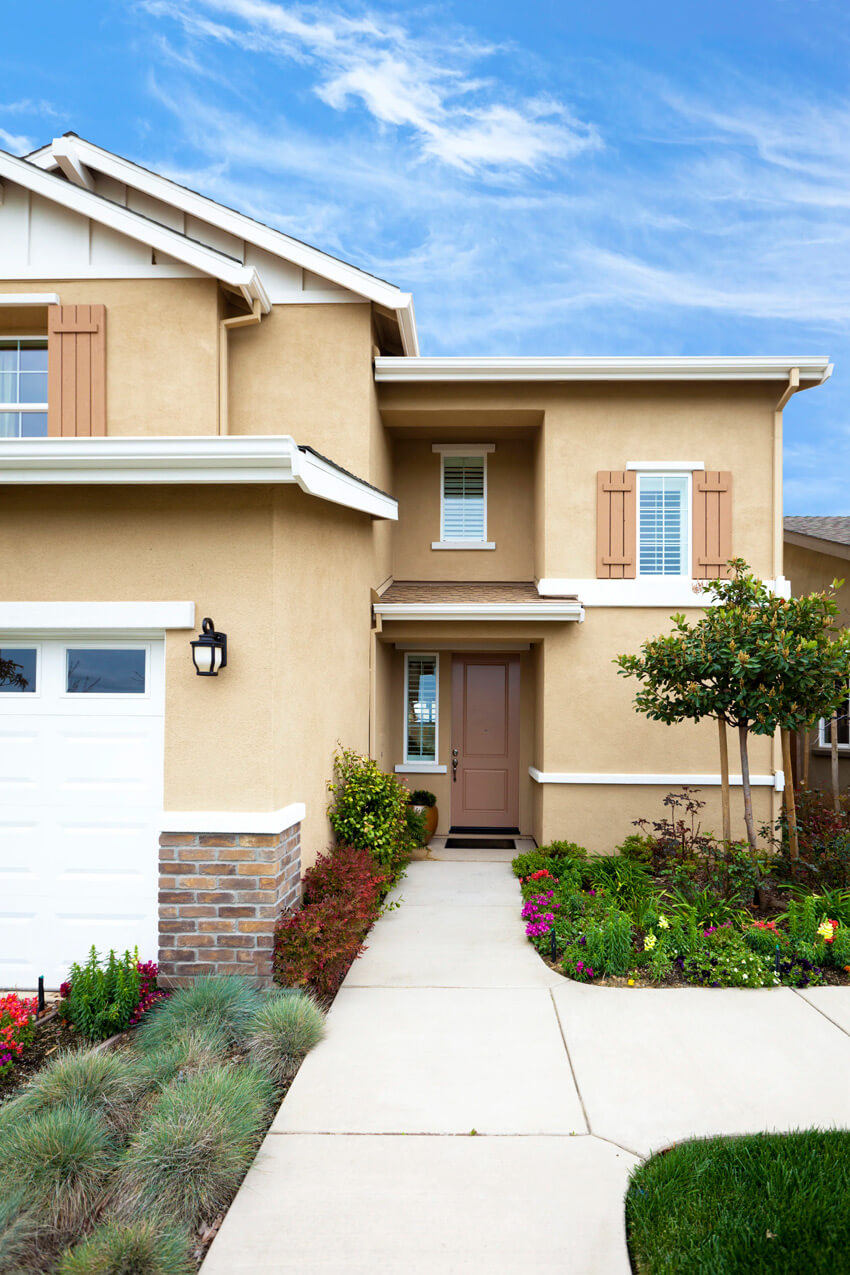
Utah homeowners planning a new build, a major remodel, or a full re-clad after storm damage almost always land on the same question: stucco or siding? Both show up all over the Wasatch Front and in St. George, and both can look great for decades – but they don’t behave the same way once Utah’s climate gets involved. Here’s how they actually compare.
How Each Handles Utah’s Freeze-Thaw Cycles
Traditional stucco is a rigid, cement-based material, and rigid materials crack under movement. Utah’s freeze-thaw swings – warm afternoons followed by hard overnight freezes – expand and contract the wall assembly behind it, and over enough winters that shows up as hairline cracking, especially around windows and corners. Vinyl and fiber cement siding are installed in overlapping panels designed to expand and contract independently, so they tolerate that same temperature swing without cracking. It’s part of why older stucco homes along the bench tend to show more visible aging than a same-age sided home, even when both were installed well.
Sun, Hail, and Monsoon Exposure
Stucco holds up well against hail and wind-driven debris – it’s a hard surface that dents and chips rather than punctures. Vinyl siding can crack or get punched through by hail, and on south- and west-facing walls it’s also vulnerable to warping from reflected window glare, something we see often near newer subdivisions with energy-efficient windows nearby. Fiber cement, like James Hardie, splits the difference – it resists hail and sun damage about as well as stucco while installing more like siding. Utah’s monsoon downpours are less about the wall surface itself and more about flashing and drainage at the base of either material, since both fail the same way if water isn’t directed away from the wall.
Maintenance and Repairs
Stucco repairs require matching an existing texture and color, which is part art and part chemistry – a patch done wrong telegraphs through the finish for years. It also needs periodic caulking at penetrations and an eye kept on the weep screed at the base of the wall. Siding repairs are more modular: a damaged panel typically gets replaced rather than patched, which is faster and less likely to leave a visible seam. Vinyl needs essentially no maintenance beyond periodic washing, while fiber cement needs repainting on a longer cycle than wood but more often than stucco needs re-coating.
Cost and Lifespan
Vinyl siding is typically the least expensive to install and among the cheapest to maintain, though it has the shortest realistic lifespan of the three before it needs full replacement. Traditional stucco costs more upfront and lasts longer structurally, but repair costs tend to run higher per incident. Fiber cement sits in between on installation cost and tends to outlast vinyl by a wide margin with proper upkeep. None of the three is objectively the “better” material – the right choice depends on how long you plan to own the home, how much upkeep you want to take on, and what look fits the neighborhood.
What We Look At Before Recommending Either
When we walk a property considering a full exterior change, we look at sun exposure on each elevation, how exposed the home is to hail and wind, what’s already failing on the existing exterior, and any HOA or architectural guidelines that might steer the decision. A home with heavy west sun and a history of window-glare complaints from a neighbor’s windows, for example, points toward stucco or fiber cement over vinyl.
If you’re weighing stucco against siding for a new build, remodel, or storm-damaged wall, reach out to Ridgeline Home Exteriors and we’ll walk your specific home through it before you commit to either one.