

Utah’s hailstorms are quick, localized, and easy to underestimate. A thunderstorm can drop dime- to golf-ball-sized hail on one Sandy neighborhood while the block a mile over stays dry, and the whole thing can be over in ten minutes. Unlike wind damage, which usually tears something off in an obvious way, hail damage tends to hide in plain sight – small dents and cracks that homeowners walk past for months before noticing something’s wrong.
When Utah Sees Hail
Most of the Wasatch Front’s hail comes from spring and early-summer thunderstorms, when cold fronts collide with warm surface air and build fast-moving storm cells. St. George and southern Utah get a second round during monsoon season, when afternoon storms can turn severe with little warning. Because these cells are so localized, it’s common for one street in Lehi or Herriman to take a beating while the rest of the city sees nothing more than rain.
What Hail Does to Siding
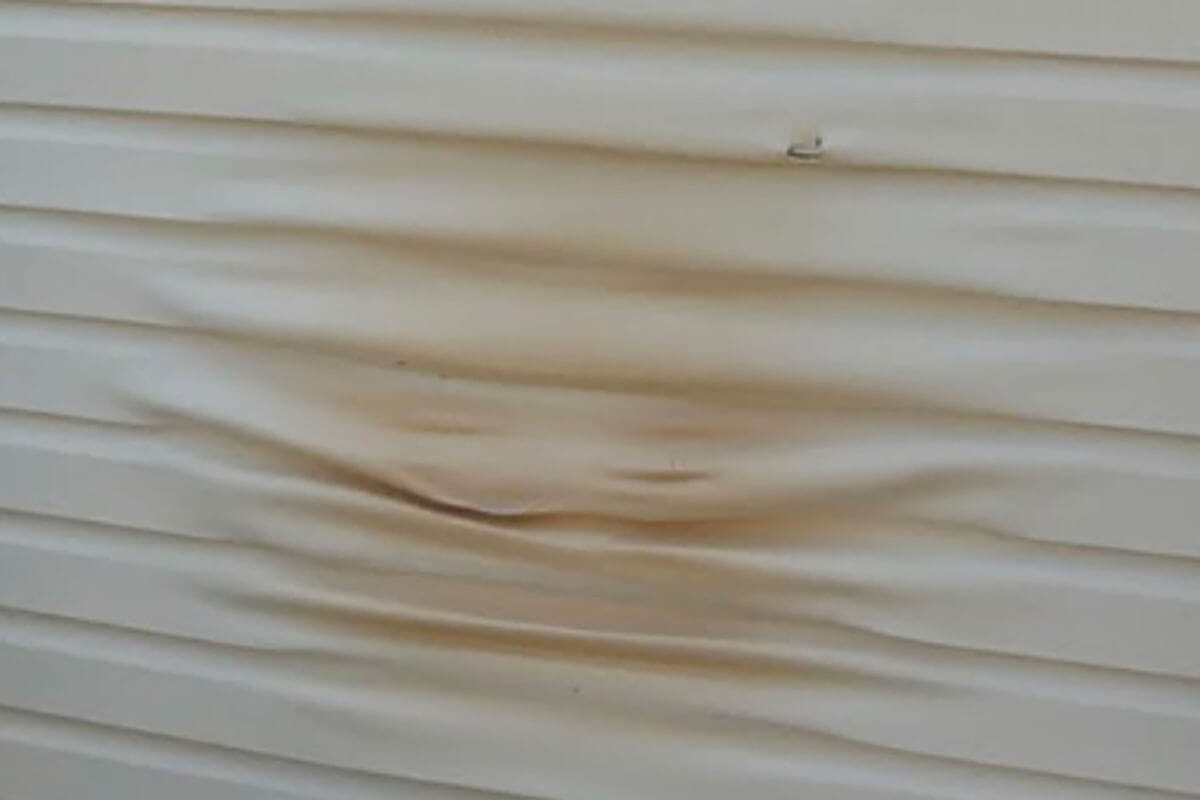
Vinyl siding is the most vulnerable of the exterior materials we work with. Hail impacts can crack or split panels outright, but more often they leave small dents or hairline “spider cracks” radiating out from a nail hole – damage that’s hard to spot unless you know where to look. Fiber cement siding like James Hardie holds up better, but it isn’t hail-proof; large stones can still chip the surface or crack a panel at the point of impact. Damage almost always shows up worse on the side of the house that faced the storm, so a west- or northwest-facing wall is usually where to start looking.
What Hail Does to Stucco
Stucco generally handles hail better than vinyl, but it’s not immune. Look for small chips or shallow craters in the finish coat, and hairline cracks that weren’t there before the storm. Older or thin-coat stucco is more prone to this than a properly applied three-coat system. On EIFS walls, the foam insulation board underneath the finish is softer than traditional stucco, so impacts there can leave dents you can actually feel by running a hand across the surface.
Don’t Forget the Gutters
Seamless aluminum gutters and downspouts take hail hits too, usually showing up as small dimples or dents along the top edge facing the storm. It’s rarely a functional problem on its own, but it’s worth checking at the same time since it’s often the most visible sign a storm did more than just soak your yard.
Why It’s Worth a Closer Look After Every Storm
Hail cracks in siding and stucco don’t always cause a problem the day they happen – but Utah’s freeze-thaw cycles can work water into those cracks over the following winter and widen them from the inside. What starts as a cosmetic ding in July can turn into a real leak point by the next spring if it never gets patched.
Filing a Hail Claim
Most homeowners policies cover hail, and adjusters typically look for a “hail signature” – random, directional impact marks concentrated on the storm-facing side of the home, rather than uniform wear spread evenly across every wall. Photograph any dents, chips, or cracks as soon as you spot them, note which walls face the direction the storm came from, and get a written estimate from a licensed contractor, since most insurers base their payout on that estimate. Claim windows are often limited to about a year from the storm date, so it’s better to have your siding and stucco checked sooner rather than later.
If a recent hailstorm came through your neighborhood, it’s worth having your siding, stucco, and gutters checked even if nothing looks obviously wrong from the ground. Reach out to Ridgeline Home Exteriors for a free inspection, and we’ll let you know exactly what we find.