

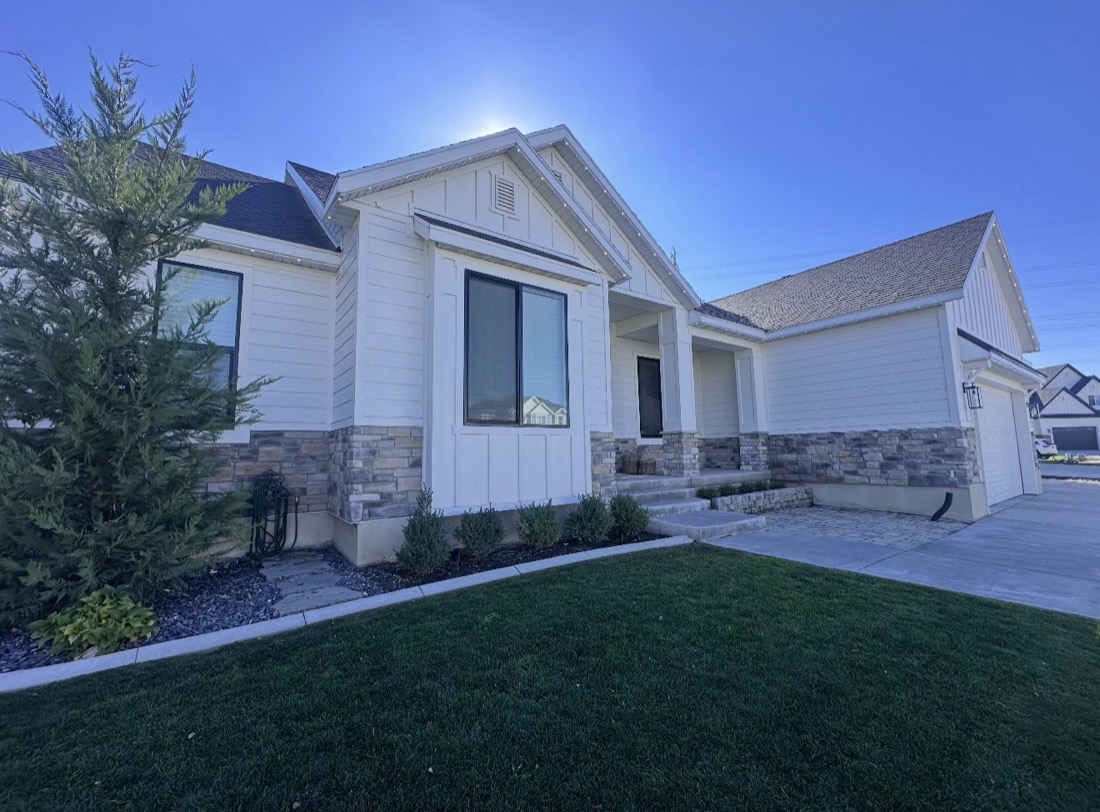
Permanent holiday lighting pitches itself as a one-time install that replaces the yearly string-light routine, and most of that pitch holds up. But there’s one question almost every homeowner asks before signing off: if the lights can stay on for months instead of a few weeks in December, what does that actually do to the electric bill? The answer is less than most people expect, once you look at what’s really drawing the power.
LED Pixels Use a Fraction of the Power String Lights Do
Each bulb in a permanent system is a small, individually addressable LED, typically drawing somewhere around a third to half a watt. A full installation across an average Utah home’s rooflines, gables, and trim – roughly 150 to 250 individual lights – usually adds up to somewhere in the neighborhood of 75 to 125 total watts. That’s less power than a single old-style floodlight, running your entire home’s light display.
What That Looks Like on an Actual Bill
Run a 100-watt system for six hours a night and you’re using about 0.6 kWh a night. At Utah’s typical residential electricity rate – generally in the 10 to 12 cents per kilowatt-hour range – that’s roughly 7 cents a night, or about $2 a month of nightly use. Even running the display every night for three full months adds up to somewhere around $6 to $8 total. A space heater or a hot tub will cost you more in a single week.
It Gets Used Far Longer Than a Holiday Light String Ever Did
Because the system runs through an app rather than a plug, homeowners don’t limit it to December. The same lights that go red and green for Christmas get switched to orange for Halloween, school colors for football season, or red-white-and-blue for the Fourth of July. Spread that modest energy cost across eight or nine months of occasional use instead of a six-week holiday season, and the cost per night of actual enjoyment keeps dropping.
Traditional String Lights Cost More Than They Look Like They Do
Incandescent C9 bulbs, the kind still wrapped around a lot of Utah rooflines every December, draw roughly 5 to 7 watts each. A hundred-bulb string pulls 500 to 700 watts – five to seven times what an LED system uses for a comparable display – and that’s before factoring in the bulbs that burn out and need replacing every season, or the extension cords and timers most homeowners are also running. The electricity itself isn’t the biggest cost difference; it’s one more place where permanent lighting quietly wins.
What Actually Changes Your Number
The total square footage of trim being lit, how many hours a night the display runs, and how many months out of the year you actually use it all affect the real cost. A smaller home with a shorter display window will land toward the low end of these estimates; a larger home running lights most nights of the year will land higher – though still well below what most homeowners expect before they ask.
App Scheduling Keeps It Predictable
Most of the systems we install let homeowners set a schedule once and forget it – lights on at dusk, off by a set time, no risk of an accidental all-nighter running up the bill. That control is part of what keeps the actual cost close to the estimate instead of a surprise.
If you’ve been holding off on permanent holiday lighting because you weren’t sure what it would do to your power bill, the honest answer is: not much. Contact Ridgeline Home Exteriors for a free quote, and we’ll walk you through what a system sized for your home would actually cost to install and to run.