

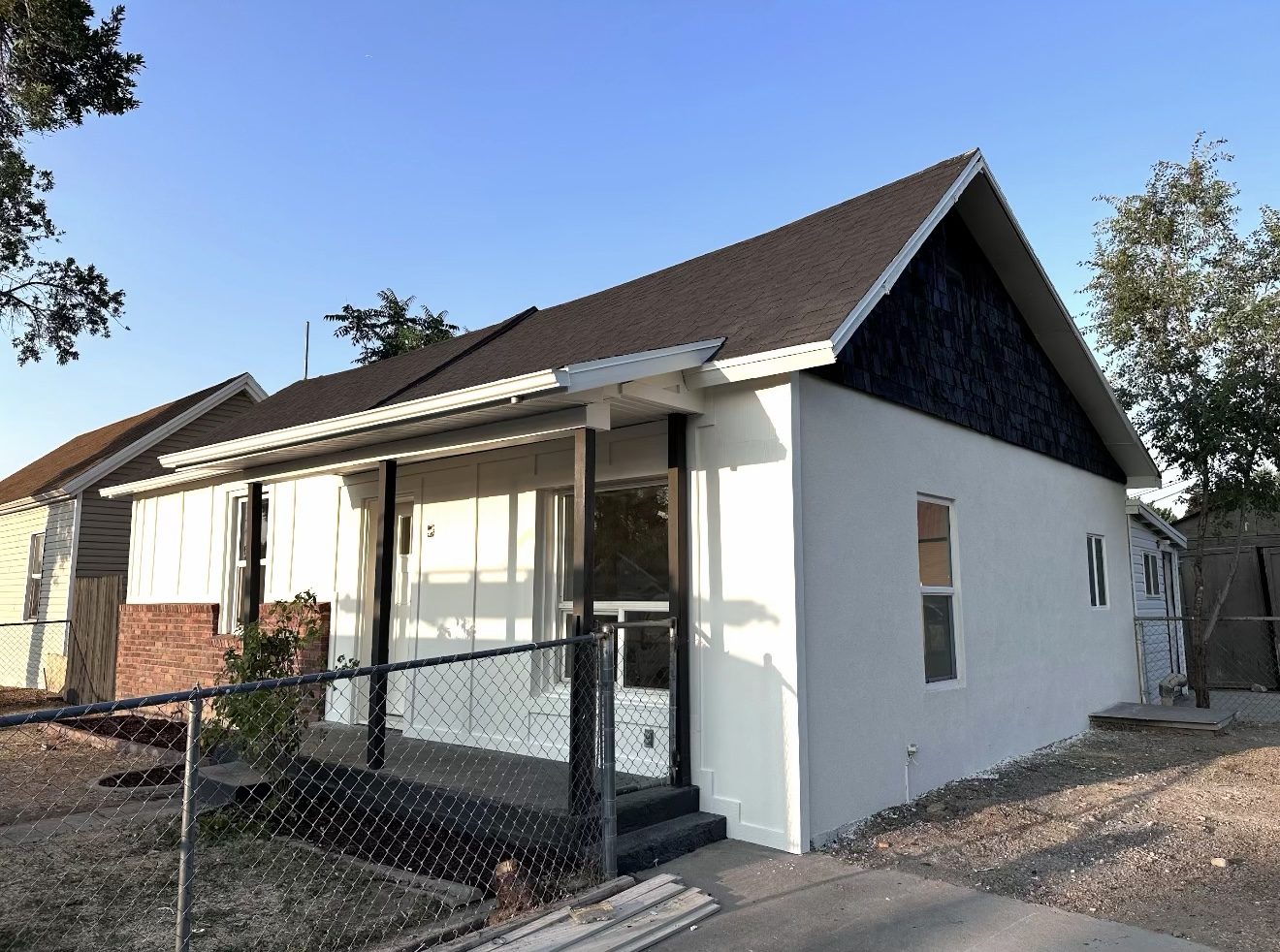
Look at any spot where a sloped roof section ties into a sidewall – above a porch roof, next to a dormer, where a single-story addition meets a two-story wall – and you’re looking at one of the most leak-prone details on a house. The fix for it is a small, specific piece of metal called kickout flashing, and on a lot of Utah homes it’s either missing entirely or was never installed correctly in the first place.
What Kickout Flashing Actually Does
Where a roof meets a wall, step flashing runs up that intersection and channels water down the slope. Without something to stop it at the bottom, that water keeps going straight behind the siding or stucco instead of out into the open. Kickout flashing is the small diverter installed right at the base of that run – it bends outward and “kicks” the water away from the wall and into the gutter below, instead of letting it dump behind the wall covering. It’s only a few inches of bent metal, but it’s doing a disproportionate amount of work.
Why It Goes Missing So Often
This is one of the most commonly skipped flashing details on a house. On older homes it was often never installed at all – it became standard practice more recently than most homeowners assume. On newer builds, it tends to fall into the gap between trades: the roofer assumes the siding or stucco crew will handle it, the wall crew assumes it’s part of the roofing scope, and it ends up on no one’s list. Re-roofing jobs are another common point where it disappears, especially if the old flashing isn’t replaced and the roofer never loops in whoever installed the siding or stucco.
Signs You Might Have a Problem
Because the water doesn’t stop, it has to go somewhere. Look for streaking or staining on siding or stucco directly below a spot where a roofline meets a wall, paint that’s bubbling or peeling in that same area, stucco that looks discolored or feels soft low on the wall near a roof-wall junction, or siding that’s buckled or shows rot right at that intersection. Inside the house, a water stain on a ceiling or wall near where a porch roof or lower roofline ties into the main structure often traces back to the same missing piece.
Why This Matters More in Utah
Spring snowmelt and heavier monsoon-season rain both send a real volume of water down these roof planes at once, and freeze-thaw cycles go to work on whatever moisture gets trapped behind the wall covering over the winter. A kickout that’s missing, undersized, or was caulked over during a repaint instead of properly flashed ends up feeding water into the same spot in the wall assembly year after year. Rot, cracked stucco, or mold often show up long before anyone connects the damage back to one small missing part at the roofline.
What to Do About It
If your home has roof-to-wall intersections – and most homes with a porch roof, bay window, dormer, or multi-level roofline do – it’s worth having someone confirm kickout flashing is actually there and sized correctly. This matters most before a re-roof, so it gets replaced rather than reused or skipped, and again afterward, in case the roofing crew didn’t coordinate with whoever handles the siding or stucco.
Ridgeline Home Exteriors works on siding and stucco around these exact trouble spots and can take an honest look at your roof-wall intersections. Contact us to schedule an inspection before a small gap in flashing turns into a bigger repair.