

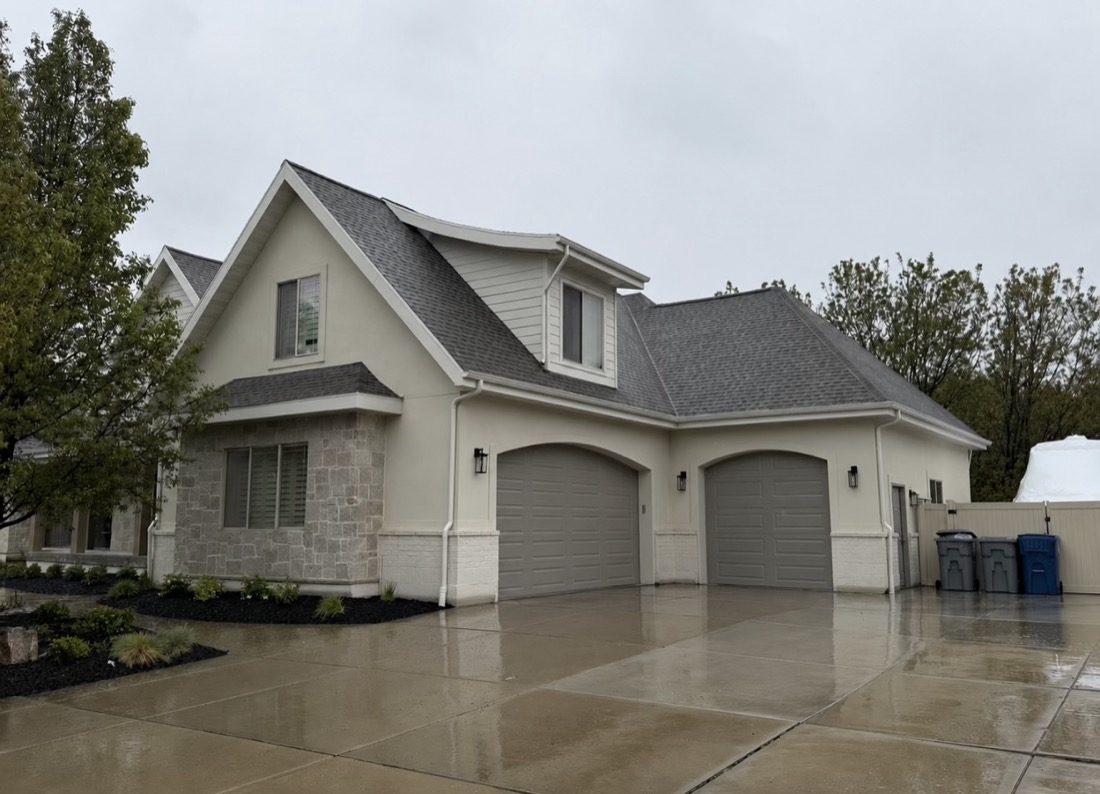
A lot of stucco homes in Utah County and the Salt Lake Valley hit the same point around the twenty-year mark. The color has gone dull and blotchy, the finish looks dated, and the same hairline cracks keep getting patched every couple of years. Homeowners usually assume the only real fix is tearing the whole thing off and starting over – but that’s often not the case. The right question is whether your walls need a skim coat or a full re-stucco, and the answer depends less on how the surface looks than on what’s going on underneath it.
What a Skim Coat Actually Is
A skim coat is a new finish layer applied over your existing stucco. The wall gets cleaned and prepped, a bonding agent goes down, larger cracks are addressed, and then a thin coat of new stucco is troweled over the top. The existing stucco stays in place and does the structural work; the skim coat gives you a fresh, uniform surface. It’s also how most homeowners change the look of a dated exterior – a new color and a smoother, more modern texture, without touching the wall assembly behind it.
What a Full Re-Stucco Involves
A full re-stucco is a different scale of project. The old stucco comes off down to the sheathing, and the system gets rebuilt from there: weather-resistant barrier, lath, scratch coat, brown coat, finish coat. It takes longer, costs considerably more, and creates real disruption around your house. What you get for that is a wall that’s genuinely new all the way through, including the moisture barrier that actually keeps water out of your framing.
How to Tell Which One You Need
The deciding factor is the condition of what’s underneath. A skim coat is a good fit when the existing stucco is well bonded and sound, the cracking is hairline and stable, and there are no signs of water getting behind the wall. Lean toward a full re-stucco when you find hollow-sounding areas that mean the stucco has separated from the lath, sections that crumble or feel soft, cracks wider than about an eighth of an inch that are still growing, rust staining bleeding through the surface, or interior signs of moisture on an exterior wall.
The distinction matters because a skim coat is a finish, not a repair. Troweling new stucco over a wall that has a failed moisture barrier or a rotted substrate hides the problem for a season and then cracks right back through – and by then you’ve paid twice.
Why Utah Is Hard on the Shortcut Version
Our climate exposes a bad call quickly. Wet stucco that freezes overnight expands, and along the Wasatch Front we run through that freeze-thaw cycle repeatedly every winter. Add the expansive clay soil that shifts under foundations here and the high-elevation sun beating on south and west walls all summer, and a skim coat applied over a compromised wall usually shows its first failures within a winter or two. A skim coat over a solid wall, on the other hand, holds up well.
What We Look At Before Recommending Either One
When Ridgeline Home Exteriors inspects a stucco exterior, we sound the walls to find delamination, check the areas that fail first – window and door corners, the base of walls, anywhere below a roofline – and look at how water is being managed around the house. Gutters that overflow onto a wall or grading that pushes water back toward the foundation will undo either repair, so that usually needs to be addressed alongside the stucco work. On a recent Utah County home, the walls tested sound, so a skim coat with new stonework accomplished the whole update without a full tear-off.
If your stucco is looking tired and you’re not sure whether you’re facing a refresh or a rebuild, it’s worth having someone check the wall before you budget for the bigger job. Get in touch with Ridgeline Home Exteriors and we’ll take a look and give you a straight answer.