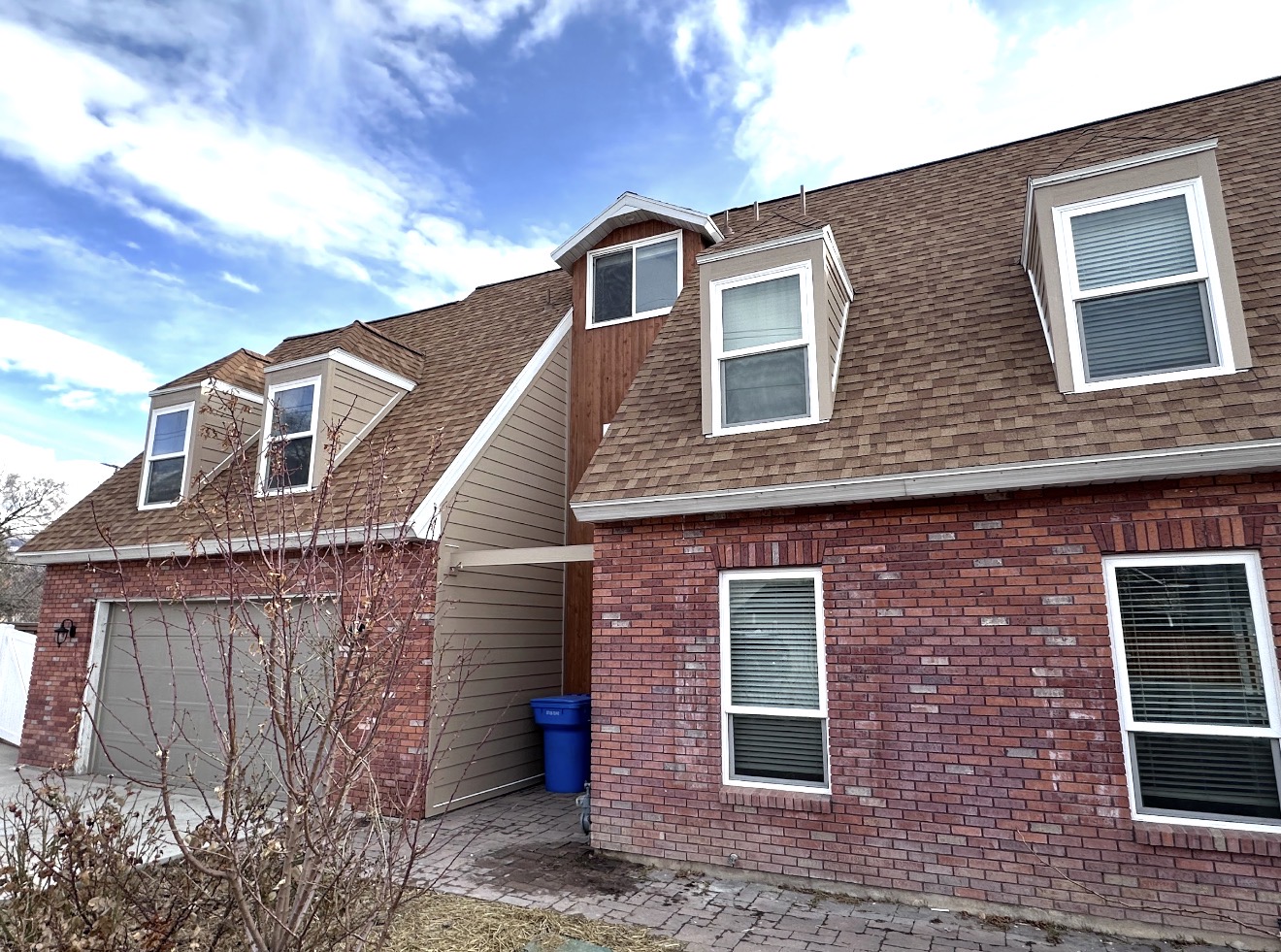
If you’re planning a siding project in Utah County, Salt Lake County, or St. George, the material decision usually comes down to two options: vinyl or James Hardie fiber cement. Both hold up well when installed correctly, but they behave differently once they’re on a Utah house through a full year of hot summers, dry winters, and the freeze-thaw swings in between. Here’s how to think through the choice.
What Vinyl Siding Does Well
Vinyl remains the most popular siding material for a reason: it’s affordable, comes in dozens of colors and profiles, and needs almost no upkeep beyond an occasional rinse with a hose. It won’t rot, and it resists the minor dings and scratches that come with everyday life around a house. Modern vinyl panels are also engineered to flex slightly with temperature changes, which matters in a climate where surface temperatures can swing more than 100 degrees between a January morning and a July afternoon.
What James Hardie Fiber Cement Does Well
James Hardie siding is a different material entirely – a blend of cement, sand, and cellulose fibers pressed into planks and baked. It’s heavier, more rigid, and holds paint far longer than vinyl, since it’s designed to be painted rather than color-molded. It’s also noncombustible, which is worth knowing if you’re in a home near foothills or open space where wildfire risk is a factor. Hail and wind-blown debris that would crack or dent vinyl generally leave Hardie siding unmarked, and it won’t warp from direct summer sun the way lower-grade vinyl sometimes does on south- and west-facing walls.
How Utah’s Climate Factors In
Two things stand out for our area. First, UV exposure at our elevation is intense, and cheaper vinyl can fade or become brittle years before it should. If you go with vinyl, it’s worth paying for a quality line rather than the builder-grade product often used on tract homes. Second, our freeze-thaw cycle – where snow melts during the day and refreezes overnight for weeks at a stretch – puts stress on any exterior material’s fasteners and seams. Hardie’s rigidity and superior paint bond make it more forgiving here, while vinyl’s flexibility is actually an asset in the same conditions, just in a different way. Neither material is wrong for Utah; they just fail differently if the installation is sloppy.
Cost and Installation
Vinyl is the more budget-friendly option upfront, both in material cost and labor time, since panels install faster and don’t require field painting. Hardie costs more – often 20 to 40 percent more installed – but it typically lasts longer before it needs replacement and holds resale value better, particularly on higher-end homes where buyers expect it. Installation quality matters more with Hardie than with vinyl: improper fastening, insufficient gapping, or skipped caulking at joints will shorten its lifespan and can void the manufacturer’s warranty, so the contractor you choose matters as much as the material itself.
Which One Makes Sense for Your Home
If you’re working with a tighter budget, staying in the home short-term, or just need a clean, low-maintenance refresh, quality vinyl is a smart, proven choice. If you’re planning to stay long-term, want the look and durability of painted siding without repainting every few years, or your home sits somewhere exposed to hail, wildfire-prone terrain, or heavy sun, Hardie is usually worth the added cost.
We install both product lines and can walk your specific house – its exposure, its budget, and how long you plan to stay – before recommending one over the other. Contact Ridgeline Home Exteriors for a free estimate on either option.