

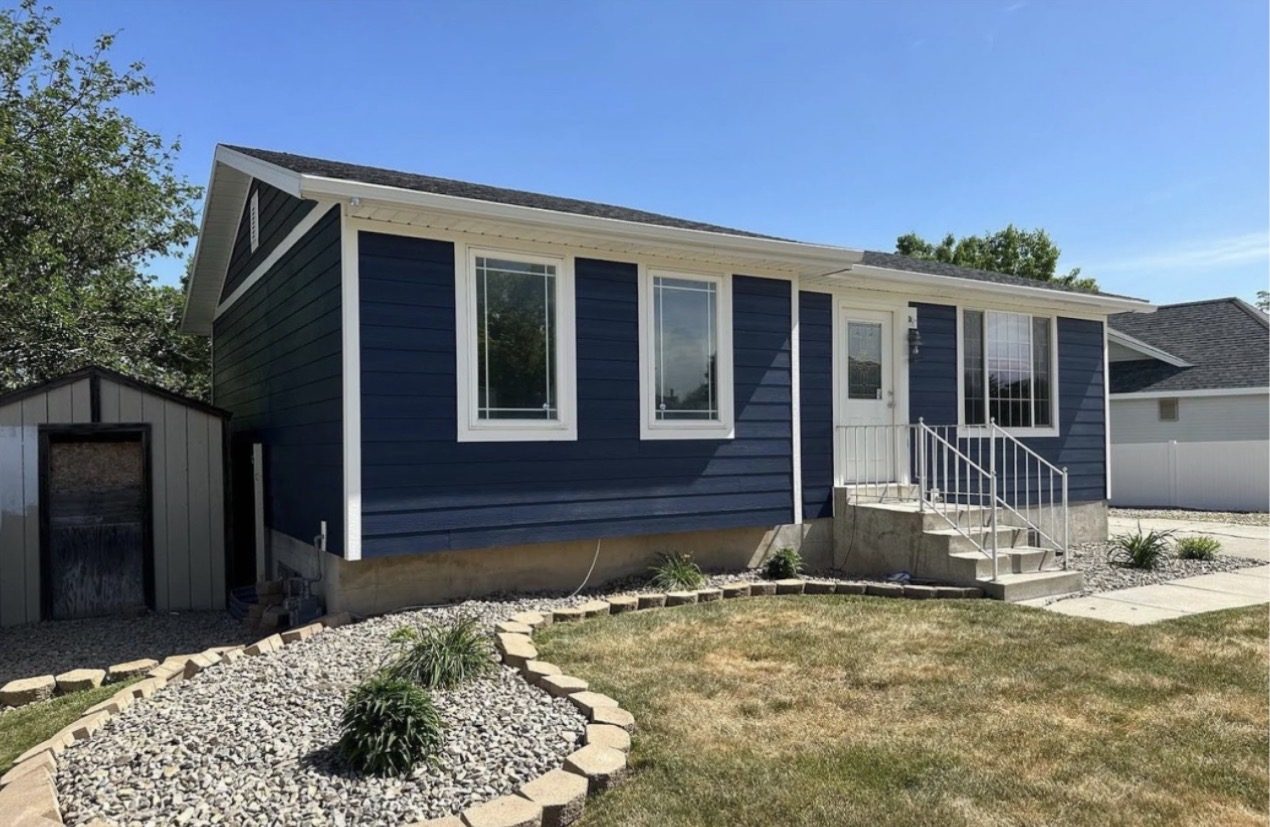
If a section of your vinyl siding has started looking rippled or wavy – like a shallow wave running down the panel – the first instinct is usually to blame the material. More often, the siding itself is fine. It’s how it was nailed, and Utah’s wide temperature swings are what finally exposed the mistake.
Why Vinyl Siding Is Built to Move
Vinyl expands and contracts with temperature more than almost any other siding material – a 12-foot panel can grow or shrink by roughly a quarter inch between a cold morning and a hot afternoon. Manufacturers design for that. The nailing hem has oblong slots instead of round holes, and the installation spec calls for nails driven through the center of those slots, left slightly loose rather than snugged tight against the panel. That play is what lets each panel slide behind the nail head as it swells and shrinks with the weather. Nail it too tight, too high in the slot, or face-nail it instead of using the hem, and the panel has nowhere to go. It buckles instead.
Why Utah’s Climate Makes It Worse
Along the Wasatch Front, a summer day can swing from the high 90s in the afternoon down into the 60s overnight, and Utah’s thin, dry air and high elevation mean a south- or west-facing wall can run even hotter than the air temperature on a clear day. Winter brings the opposite extreme – sub-zero mornings followed by 50-degree afternoons when a warm front or canyon wind moves through. That adds up to a lot more thermal cycling per year than siding sees in milder, more humid climates, and every cycle puts more stress on a panel that was fastened too tight. It usually takes a few seasons before the buckling becomes visible, which is part of why it tends to get blamed on the siding itself rather than the install.
How to Tell It’s an Installation Issue
Thermal buckling has a distinct look: the ripples run the length of the panel in a fairly even wave, and they tend to show up across a whole wall or elevation rather than one isolated spot. That’s different from hail damage, which leaves scattered dents and cracks, and different from the localized warping caused by sunlight reflecting off a nearby window, which stays confined to one patch shaped like the window’s reflection. Buckled panels also tend to come loose at the corners or won’t lock fully into the course below, since the whole run has shifted trying to find room to expand.
What Actually Fixes It
There’s no caulk or adhesive fix for buckled vinyl. The panels need to come off and go back on correctly – nailed through the center of the slot with the manufacturer’s recommended gap, usually about the width of a nail shank, so the panel can keep moving with the temperature. In most cases that means replacing the panels across the affected run rather than just the worst-looking one or two, since the whole section was likely installed the same way. If buckling shows up on siding we didn’t install, we check the fastening before assuming it’s a product defect – it’s a quick, obvious diagnosis once you know what to look for.
If your siding has started rippling, it’s worth having it looked at before wind finds its way underneath a loose panel. Contact Ridgeline Home Exteriors for a free inspection, and we’ll tell you straight whether it’s a fastening fix or something else.