

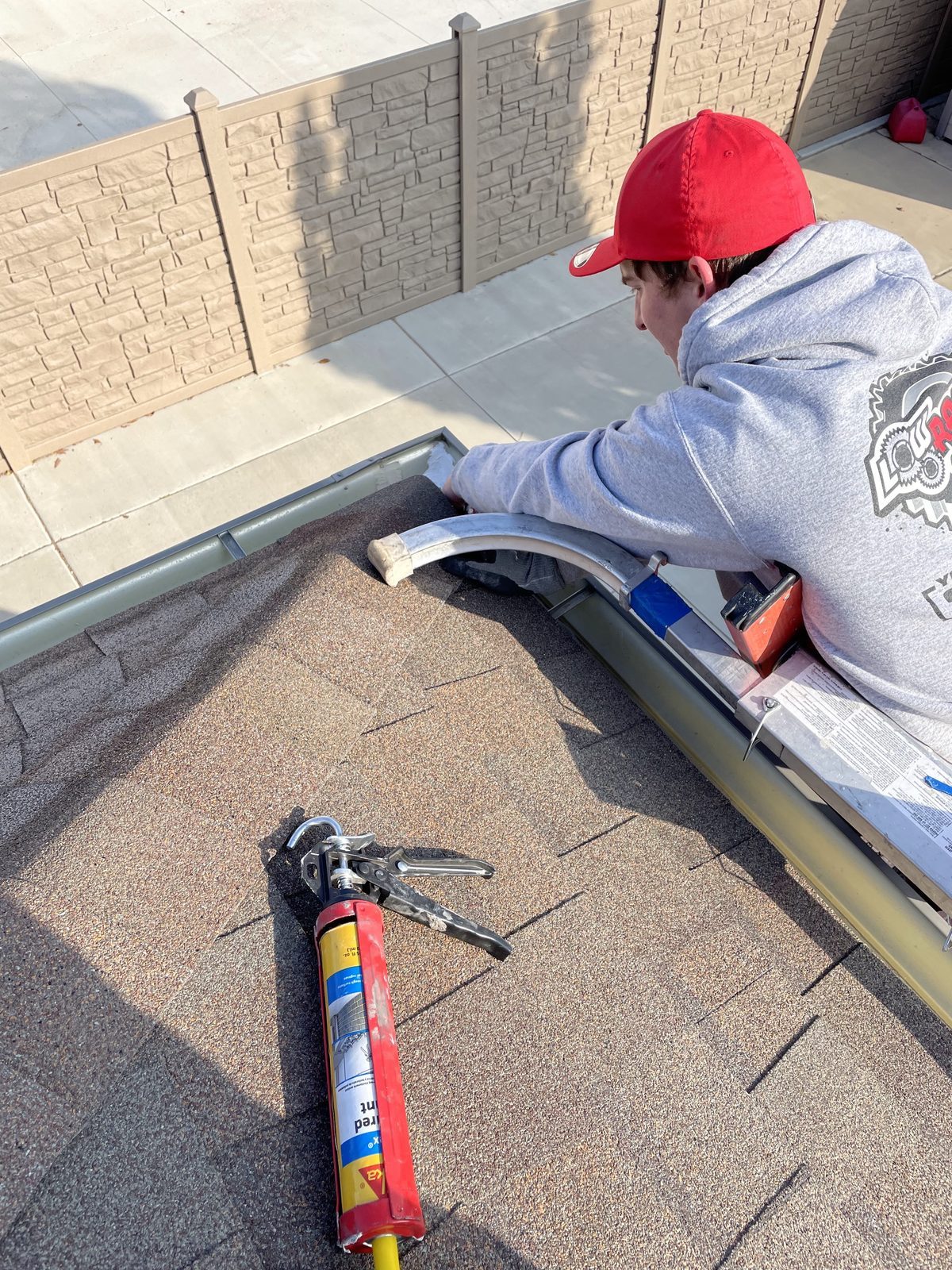
A gutter system built to handle rainfall isn’t necessarily built to survive a slab of snow and ice letting go of the roof all at once. Along the Wasatch Front and in Utah’s higher-elevation neighborhoods, this is one of the more common causes of gutter damage every winter – homeowners notice a bent or detached section after a thaw and assume it’s just old age, when the real cause was a single heavy snow slide weeks earlier.
What’s Actually Happening on the Roof
Snow doesn’t always melt off a roof gradually. On steep pitches, metal roofing, and south-facing slopes that catch direct winter sun, the snowpack can warm just enough at the roof surface to lose its grip, then release as a single sheet instead of melting off in stages. By the time that sheet reaches the eave, it can weigh several hundred pounds per linear foot and is moving with real force. A gutter hung to shed rainwater has nowhere near that kind of load capacity built in.
Why Gutters Take the Hit
Gutters sit directly in the path of that sliding mass, mounted with hangers spaced for water weight, not impact. When a slide hits, hangers can pull loose from the fascia, sections can bow or crease, and in bad cases entire runs separate and fall. Metal roofs are the most common source of this kind of damage because their smooth surface lets snow release in large sheets rather than shedding gradually the way asphalt shingles tend to. Steep pitches and south- or west-facing slopes with strong winter sun exposure see it most.
A Different Problem Than Ice Dams
It’s worth separating this from ice dam damage, which comes from meltwater refreezing at the eaves and backing up under the shingles. Snow slide damage is mechanical – a sudden weight and impact event, not a water intrusion issue. The fix is different too: attic insulation and ventilation address ice dams, but they do nothing to stop a slab of snow from letting go of a metal roof.
What Actually Prevents It
Snow guards or snow retention bars installed near the eave break the snowpack into smaller sections and slow its release, so it comes off in manageable amounts instead of all at once. They’re a one-time install along the lower courses of the roof and are the most effective fix on metal roofing specifically. On the gutter side, heavier-gauge seamless gutters, hangers spaced tighter than standard, and hidden hangers anchored into solid fascia all hold up better against impact than lightweight sectional gutters hung with spikes and ferrules.
Where This Matters Most in Utah
This is primarily a concern for homes along the benches and foothills of Utah and Salt Lake counties – areas like Alpine, Highland, and Draper that hold onto heavier, wetter snowpack through the winter. St. George homeowners can generally set this one aside.
If your gutters came down or bent during a winter thaw and you’re not sure whether it was age, installation, or a snow slide, Ridgeline Home Exteriors can take a look and tell you honestly what happened – and whether snow guards or a gutter upgrade make sense for your roof. Contact us for a free quote.