

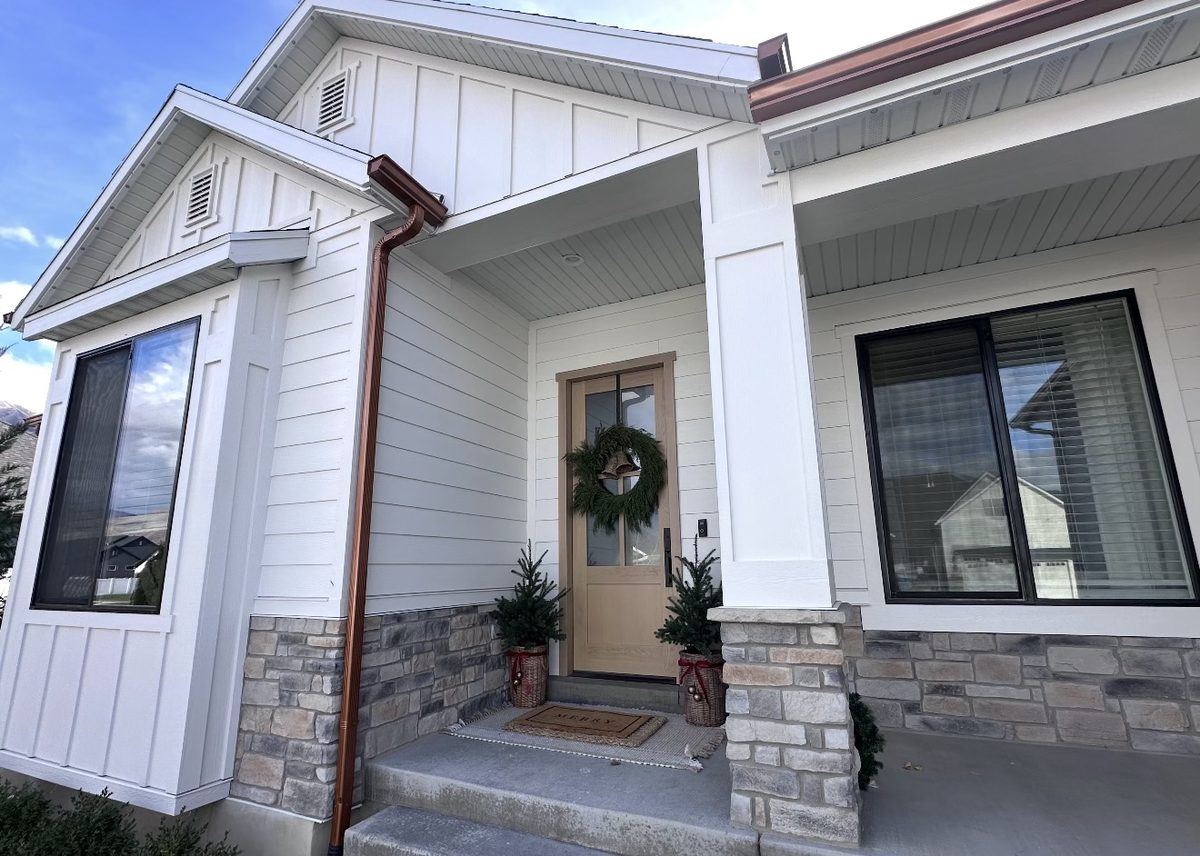
Insulated vinyl siding shows up on a lot of estimates as a line-item upgrade, usually with a vague pitch about “better energy efficiency.” That’s true, but it’s not really why it’s worth considering in Utah. The foam backing changes how the siding performs in the wind, hail, and heat this state actually throws at a wall – and that matters more than the R-value on the spec sheet.
What “Insulated” Actually Means
Standard vinyl siding is a thin, flexible panel with nothing behind it but the house wrap and sheathing. Insulated vinyl has a layer of rigid foam laminated directly to the back of each panel, usually adding somewhere between R-2 and R-5 depending on the product. The foam does two things at once: it adds a small amount of insulating value, and it fills the hollow space behind the panel so the siding has something solid to rest against instead of just hanging on the wall.
Where the R-Value Actually Helps
Most homes along the Wasatch Front and in St. George already have proper wall insulation behind the sheathing, so an extra R-2 to R-5 from the siding itself is a modest add-on, not a dramatic drop in your heating bill. Where it does matter more is on older homes – ramblers and split-levels built before modern energy codes – where that extra layer meaningfully reduces thermal bridging at the studs. You’ll sometimes hear this called “photographing,” where you can faintly see the stud lines through standard siding on a cold day because the wood conducts heat differently than the insulation between the studs. Insulated vinyl smooths that out.
What Actually Changes in Utah’s Climate
The bigger difference shows up in how the siding holds up physically. Because the foam backing gives each panel something rigid to sit against, insulated vinyl resists the rippling and buckling that standard panels can develop as they expand and contract through Utah’s wide daily temperature swings. It also holds up better against hail – the foam absorbs some of the impact instead of letting a hailstone dent an unsupported panel – and it dampens sound, which homeowners near busy roads in Utah County or Salt Lake County notice more than they expect.
Where It Doesn’t Make Sense
Insulated panels typically cost 20 to 30 percent more than standard vinyl per square, and they’re thicker, which matters if you’re patching or extending existing siding rather than redoing a whole elevation. Mixing insulated and standard panels on the same wall usually looks off because of the profile difference, so for a repair job on a home with standard vinyl, matching what’s already there is almost always the better call rather than introducing insulated panels on just one section.
How to Decide
If you’re re-siding an entire home – especially an older one, or one near road noise – the upgrade is usually worth the added cost over the life of the siding. If you’re doing a straightforward repair or like-for-like replacement on existing standard vinyl, stick with standard. It’s less about which product is “better” and more about which one fits the scope of the project you’re actually doing.
Not sure which makes sense for your home? Contact Ridgeline Home Exteriors and we’ll walk the house with you and give you a straight answer before you pay for an upgrade you don’t need.