

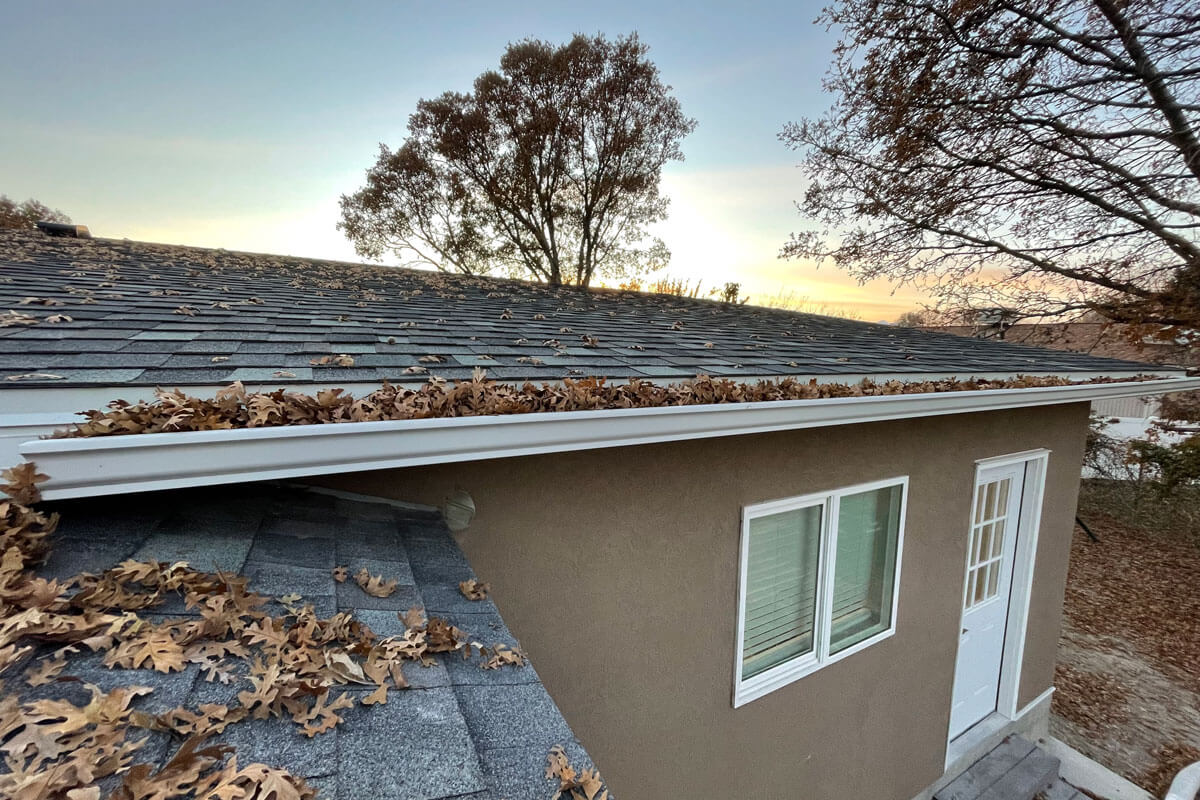
Most homeowners never think about gutter size until a downpour sends water sheeting over the top instead of down the spout. Standard residential gutters come in two sizes – 5-inch and 6-inch – and picking the wrong one is one of the most common reasons a newer gutter system still overflows. Here’s how to tell which size actually fits your Utah home.
What the Numbers Actually Mean
The measurement refers to the width across the top of the gutter, which determines how much water it can hold and move before it spills over the edge. A 5-inch K-style gutter handles roughly 5,520 gallons of water per hour on a level run; a 6-inch gutter handles closer to 8,300. That jump matters more than it sounds like, because roof size and rainfall intensity – not personal preference – are what should decide which one you need.
When 5-Inch Gutters Are Enough
Five-inch gutters are the standard for a reason – they handle the water load on most single-story homes and moderately sized roofs just fine, and they cost less both to install and to replace down the road. If your roof is under roughly 2,000-2,500 square feet and doesn’t have long, steep runs feeding into a single downspout, 5-inch is usually plenty.
When You Need to Size Up to 6-Inch
Larger and steeper roofs concentrate a lot more water into each linear foot of gutter than a modest roofline does, and steep pitches speed that water up before it ever reaches the edge. Homes with big, complex rooflines, long unbroken runs, or multiple roof planes draining into one gutter section are exactly where 5-inch gutters get overwhelmed first – usually at the corners and near downspouts, where the water is moving fastest. Utah’s summer monsoon storms make this worse, since they tend to dump a lot of rain in a short window rather than spreading it out. If you’ve noticed water topping the gutter during heavy storms, or staining on the fascia below a specific stretch of roofline, that’s usually a sizing problem rather than a clog.
Downspouts Matter Too
Gutter size and downspout size are a package deal. A 6-inch gutter paired with an undersized 2×3-inch downspout just moves the bottleneck instead of fixing it – water backs up at the outlet even though the trough itself has plenty of capacity. Larger gutters are typically matched with 3×4-inch downspouts, and homes with heavy roof loads sometimes benefit from an extra downspout altogether rather than relying on a single oversized one to do all the work.
What About the Rest of the System?
Sizing up the gutters doesn’t do much good if the water has nowhere to go once it hits the ground. If you’re upgrading to 6-inch gutters because your home is shedding more water than it used to, it’s worth having your downspout extensions and grading checked at the same time, and considering whether an in-ground drainage system would carry that extra volume away from your foundation instead of just moving the puddle a few feet.
Getting the Sizing Right
There’s no universal rule of thumb that replaces actually looking at your roof – square footage, pitch, valleys, and how many downspouts you have all factor into the right size. At Ridgeline Home Exteriors, we form seamless gutters on-site in both 5-inch and 6-inch profiles, so we can size each run to what your roof is actually shedding rather than defaulting to whatever’s standard.
If your current gutters are overflowing or you’re planning a replacement, we’re happy to walk your roofline and tell you honestly which size you need. Contact us for a free quote and we’ll help you get water moving off your roof the way it should.