

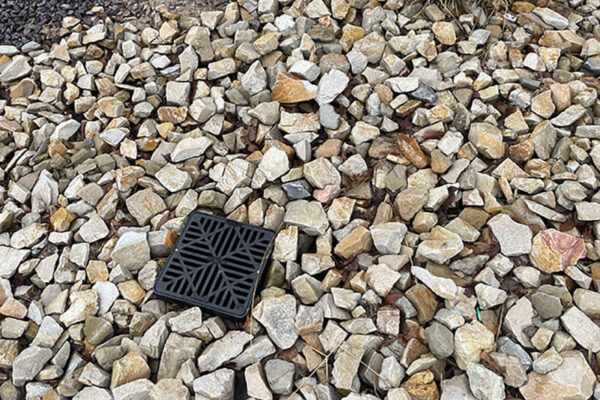
Utah’s clay-heavy soil and rapid spring snowmelt can turn a well-graded yard into standing water at your foundation almost overnight. In-ground drainage systems solve that problem quietly and permanently, moving water away from your home before it has a chance to cause damage.
What Is an In-Ground Drainage System?
An in-ground drainage system is a network of buried perforated pipe – often called a French drain – that collects groundwater and surface runoff, then channels it away from your foundation to a safe discharge point, such as a storm drain, a dry well, or a lower part of the yard. Downspouts can also be tied directly into the system, so roof water never has the chance to pool at the base of your walls.
Why Utah Yards Need Them
Along the Wasatch Front and throughout Utah County, heavy clay soil drains slowly, so spring runoff and sudden storms tend to sit on the surface instead of soaking in. In St. George, summer monsoon downpours can drop an inch of rain in under an hour on ground that’s baked hard all season and can’t absorb it fast enough. Either way, that water finds the lowest point in the yard – and more often than not, that’s right next to the foundation.
Signs You Might Need One
Standing water in your yard more than a day after rain or snowmelt, a soggy strip along your foundation, water seeping into a crawl space or basement, and downspouts that dump water within a few feet of your house are all signs your yard isn’t draining the way it should.
Gutters vs. In-Ground Drainage
Gutters and in-ground drains work together, not separately. Gutters catch water coming off your roof; in-ground drainage carries it the rest of the way, away from your home instead of dumping it at the base of your siding or foundation. A gutter system without somewhere for that water to go just moves the problem a few feet closer to your basement.
Why It Matters Long-Term
Repeated exposure to standing water softens the soil beneath and around your foundation, which can lead to settling, cracked concrete, and water intrusion over time. It’s also a common contributor to stucco damage near the base of a home, since prolonged moisture at grade level wicks upward into the wall system. Addressing drainage early is almost always less expensive than repairing what a season or two of standing water can do.
What Installation Looks Like
We start by evaluating your yard’s grading, your existing downspouts, and the lowest safe point to discharge water, then design a system around your property instead of digging a generic trench. Pipe is buried below the frost line and covered so the yard looks untouched once the work is finished – no visible hardware, no bare trenches, just a lawn that no longer holds water after a storm.
Best Time to Install
Late summer and fall, before the ground freezes and before the next round of spring snowmelt, is typically the easiest window for installation. That said, if you’re dealing with standing water or a wet basement right now, it’s worth having your yard evaluated regardless of season – the sooner the water has somewhere to go, the sooner the damage stops.
If you’ve noticed standing water after storms, a soggy patch of lawn that never seems to dry out, or dampness along a basement wall, it’s worth having your yard’s drainage checked before it turns into a bigger repair. Reach out to Ridgeline Home Exteriors for a free evaluation.